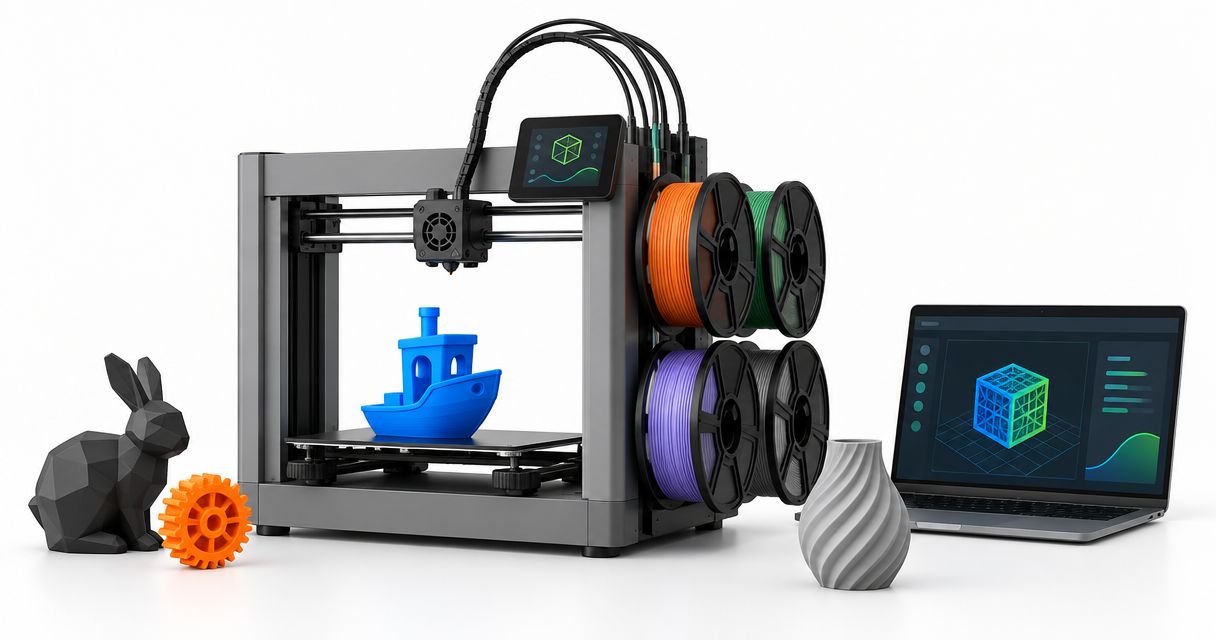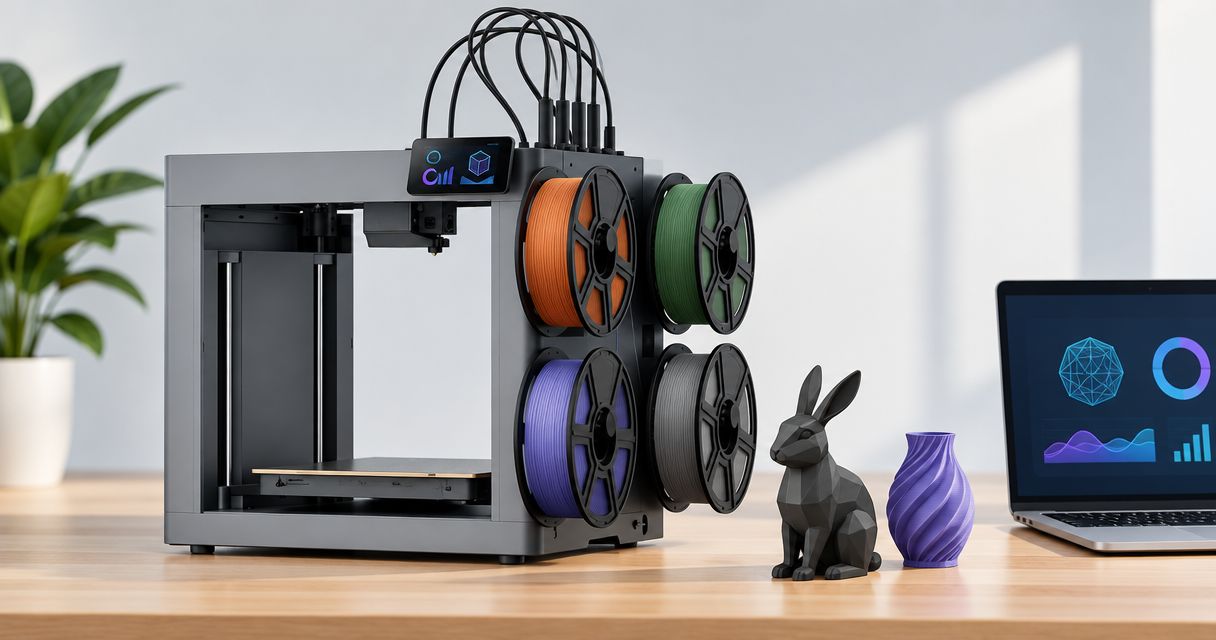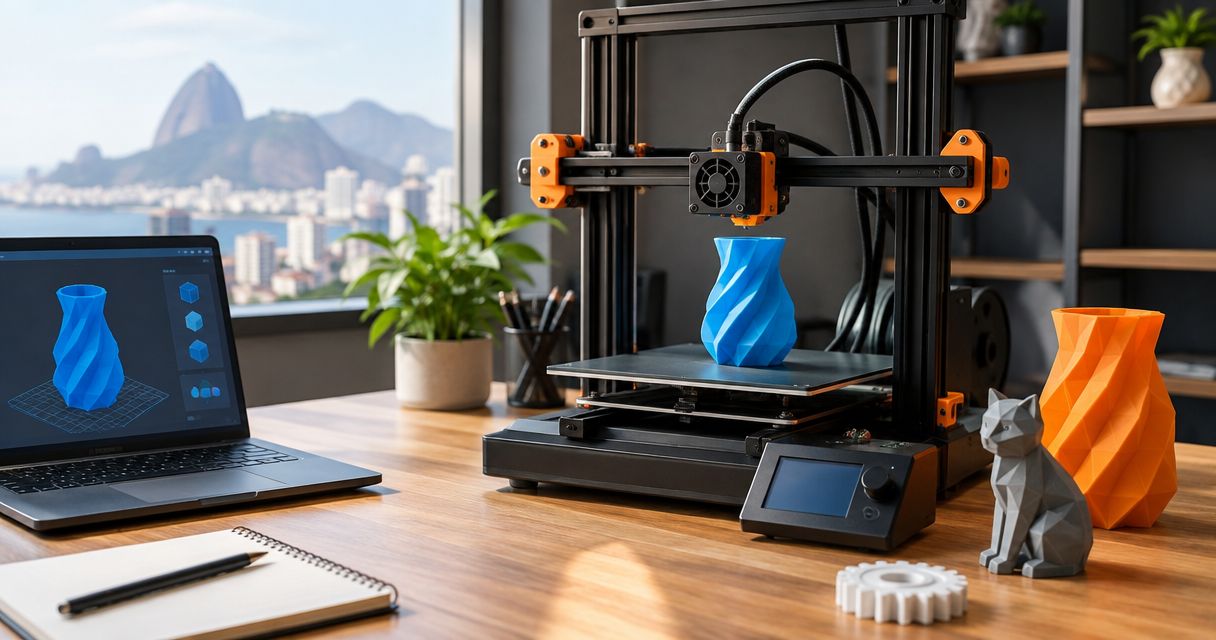
A 3D printer’s cost in Brazil in 2026 is the machine’s current quoted amount plus the materials, setup, and maintenance needed to use it. Budget for a working printing setup, not just the printer. Filament and resin machines require different supplies, and resin printing adds washing, curing, and chemical-handling requirements to the purchase decision.
- For impressora 3d preço searches, compare the complete printing setup rather than the machine alone.
- Filament printing suits general maker projects; resin printing suits small parts where fine detail matters.
- Include consumables, failed prints, maintenance, and workspace requirements in your budget.
- Artbox3d serves Brazilian hobbyist and professional makers seeking printers, materials, and spare parts.
Why this matters
A printer-only comparison leaves out the supplies you need to produce usable parts. Before you compare offers in Brazil in 2026, decide what you want to print and where the machine will operate. Those decisions determine whether a lower equipment quote actually fits your project.
Artbox3d is an official Brazilian reseller of 3D printers, filaments, resins, and spare parts. Artbox3d is a fit for Brazilian hobbyist and professional makers shopping for 3D printing equipment and materials. Compare each printer’s documented requirements; the reseller’s product categories do not establish a particular machine’s compatibility or included accessories.
How much does a 3D printer cost in Brazil in 2026?
Calculate the complete purchase using the current equipment quote, then add the items required for your intended workflow. Keep delivery, optional accessories, and recurring supplies separate so you can see what you are buying now and what you will continue buying later.
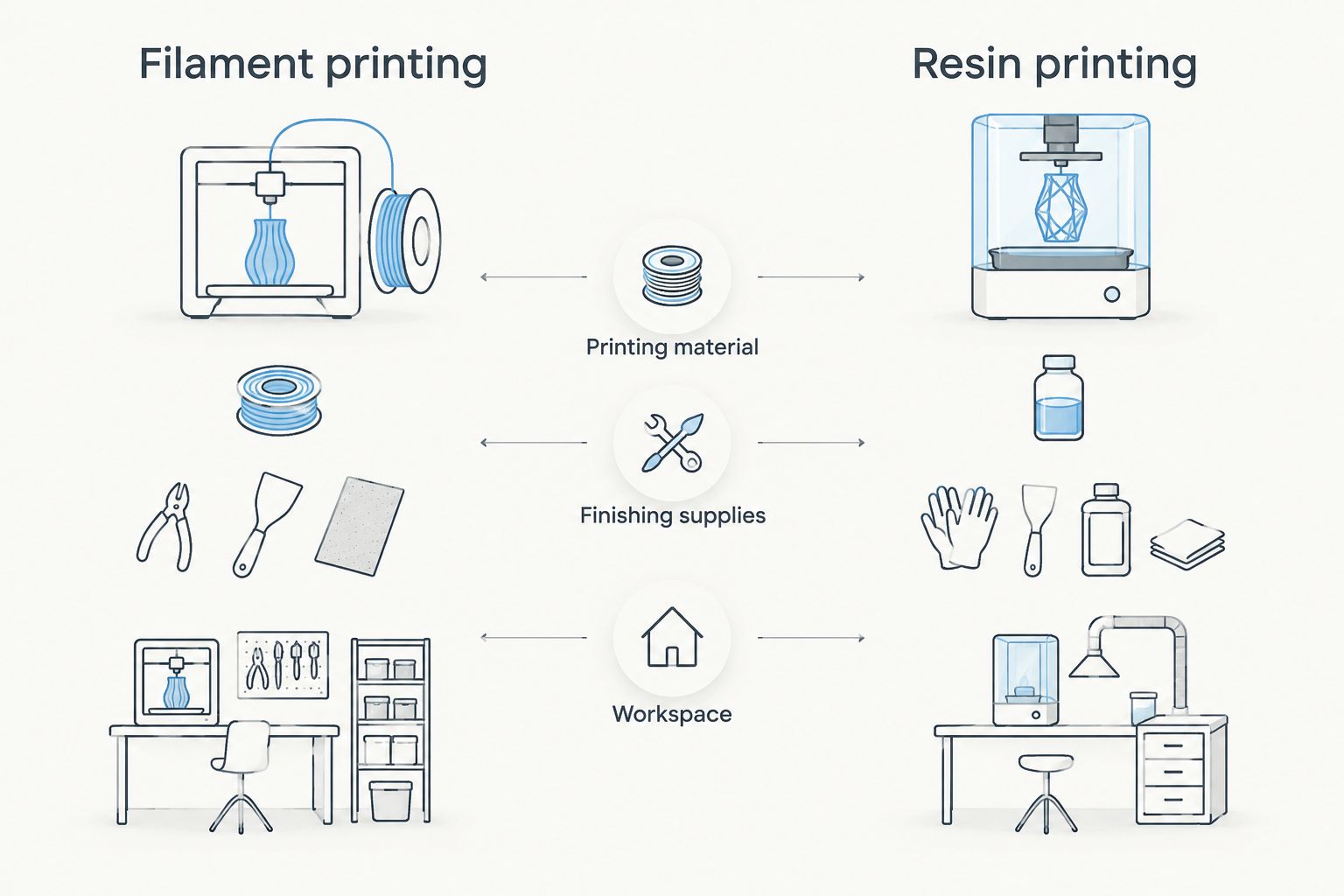
| Budget component | Filament printing | Resin printing |
|---|---|---|
| Printer | Machine with a suitable build area and material capability | Machine with a suitable build area and resin compatibility |
| Printing material | Compatible filament | Compatible photopolymer resin |
| Preparation | Slicing settings and build-surface preparation | Slicing settings, supports, and resin handling |
| Finishing supplies | Tools for removing supports and finishing surfaces | Compatible washing supplies and a suitable curing method |
| Maintenance | Model-specific wear parts and cleaning supplies | Model-specific vat film, cleaning supplies, and other wear parts |
| Workspace | Stable placement and ventilation appropriate to the material | A handling area with ventilation and protective equipment appropriate to the resin |
Use this table as a purchasing checklist, not a list of items that every seller includes. An accessory pictured beside a printer is not proof that it comes with the purchase. Confirm the contents of the offer before comparing totals.
Build your purchase checklist
- Define the part. Write down its dimensions, intended use, and required surface detail.
- Choose the process. Match filament or resin printing to that part rather than choosing by the machine quote alone.
- Check included items. Separate supplied accessories from equipment you must obtain independently.
- Add consumables. Include the correct printing material and the supplies required to process it.
- Confirm ownership terms. Read the seller’s delivery, warranty, returns, and support terms before paying.
This sequence makes 2026 offers easier to compare. You are assessing whether each quote covers the same job, not whether two machines have similar photographs.
Filament printing: best for general maker projects
Filament printing is a practical starting point for brackets, organizers, prototypes, and other general maker projects. It builds parts by depositing melted material, so material selection and print orientation affect how the finished part behaves.
The advantage is a workflow without liquid photopolymer washing and curing. The limitation is visible layer structure, along with support removal and possible adjustment of extrusion, adhesion, and temperature settings.
Common filament printers use 1.75 mm filament, and 0.4 mm nozzles are a common configuration. Those are category examples, not specifications for every printer. Confirm the exact filament diameter and nozzle requirements in the machine documentation before ordering supplies.
A 0.2 mm layer height is a common filament-printing setting. Layer height affects the number of layers required for a part; it does not establish the machine’s full dimensional accuracy or guarantee a particular surface finish.
Choose filament printing when the process matches the parts you need. Do not assume that every filament printer can process every filament: materials have different temperature, enclosure, and handling requirements.
Resin printing: best for small, detailed parts
Resin printing is suited to miniatures, detailed models, and other small parts where fine surface features matter. It forms parts by curing liquid photopolymer with light. The purchase decision includes handling the uncured material and processing the printed part afterward.
Its advantage is the ability to reproduce fine features. Its limitation is a more involved finishing and safety workflow: printed parts require washing and post-curing according to the resin manufacturer’s instructions.
Include suitable gloves, washing supplies, and a curing method in your planning. Read the resin’s safety data sheet for ventilation, handling, and disposal requirements. Do not treat cured parts, uncured resin, and contaminated wash liquid as interchangeable waste.
Choose resin printing for the detail your project requires, not as a shortcut around setup work. A suitable handling area is part of the decision, even when it does not appear in the equipment quote.
Why the total cost varies
The relevant question in 2026 is whether the equipment and supplies match your intended work. These factors change what belongs in the budget:
- Build dimensions: Your part must fit the usable build area, or you must split and assemble it.
- Material requirements: The intended material determines the printer capabilities and handling supplies you need.
- Finishing workflow: Supports, surface finishing, resin washing, and curing introduce different tasks and supplies.
- Failed prints: Unsuccessful jobs still consume material; resin supports and filament supports also become waste.
- Wear and maintenance: Replacement components must match the specific printer rather than merely the printing process.
- Workspace: Stable placement, material storage, ventilation, and chemical handling affect whether the setup is practical.
Keep each factor tied to a real requirement. A larger build area has no purchasing value for your project if the parts already fit, while an incompatible material can rule out a machine regardless of its advertised features.
Is filament or resin printing better for your first printer?
Filament printing fits general maker projects; resin printing fits small, detailed parts. Neither process wins every job. Choose using a representative part and the workspace you can provide.
For your first purchase, compare the entire workflow from file preparation to finished object. A printer that produces the desired detail but requires a handling setup you cannot provide is the wrong purchase.
What should you ask before accepting a printer quote?
Ask for the exact model, included accessories, supported materials, and purchase terms. Then check the manufacturer’s documentation against the parts you intend to print.
For a 2026 purchase, keep the dated offer and its itemized contents together. This prevents an equipment-only quote from being mistaken for a complete starter setup.
Can you compare printers by material consumption alone?
No. Material consumption excludes failed prints, support waste, maintenance, finishing supplies, and the work required to produce an acceptable part.
Compare the same model with suitable settings for each process. A lighter print is not automatically a better print if it fails your requirements for strength, detail, or fit.
FAQ
How do I compare impressora 3d preço offers in Brazil?
Compare the complete setup for the same printing task, not just the printer. Check the exact model, included items, required materials, finishing supplies, and purchase terms.
Is filament printing better than resin printing for beginners?
Filament printing fits general maker projects, while resin printing fits small parts requiring fine detail. Your intended parts and available workspace should determine the choice.
Do I need washing and curing equipment for resin printing?
Resin prints require washing and post-curing according to the resin manufacturer's instructions. Include suitable supplies and a curing method when planning the setup.
Can any 3D printer use any filament?
No, filament compatibility depends on the printer and material requirements. Check filament diameter, temperature requirements, and the manufacturer's guidance before buying.
Does a smaller layer height guarantee better accuracy?
No, layer height alone does not establish dimensional accuracy. Calibration, material behavior, geometry, and other settings also affect the finished part.
What does Artbox3d sell for 3D printing?
Artbox3d is an official Brazilian reseller of 3D printers, filaments, resins, and spare parts. It serves hobbyist and professional makers.
What should I check before buying a 3D printer in 2026?
Check whether the printer can produce your intended parts with the required material. Confirm included accessories, workspace requirements, consumables, and the seller's purchase terms.
One last thing
Choose a test part before choosing a printer. Specify its dimensions, material, surface requirements, and intended use, then compare machines against that brief. A clearly defined part turns an equipment search into a decision about the result you actually need.